Overview: Swimming Lessons
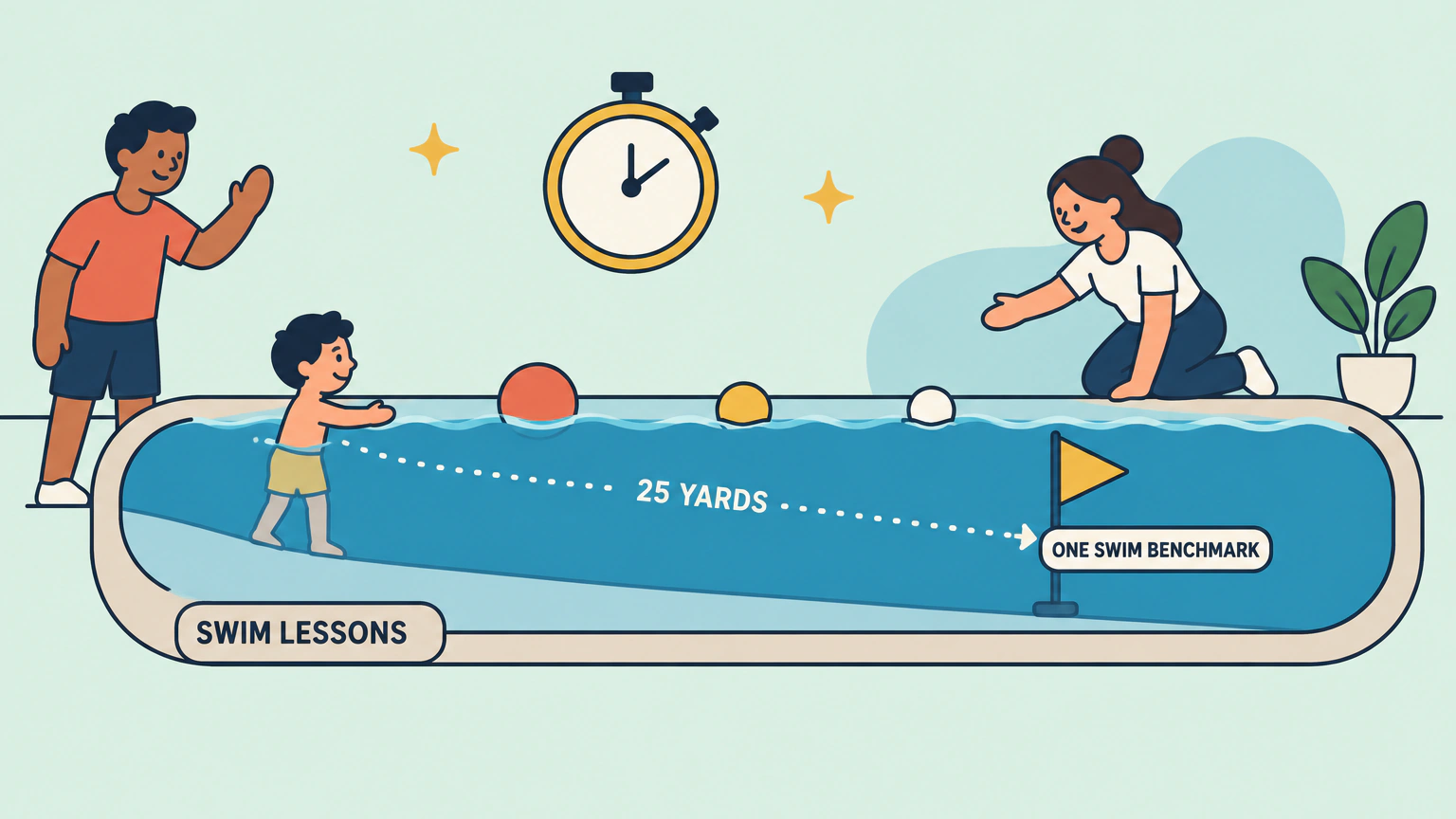
Before anyone swims a stroke, a decent school teaches what to do when a child ends up in water without meaning to. Getting a breath. Rolling onto the back. Finding the wall and getting a hand on it. Stroke technique comes after that, and a school that starts with front crawl arms has the order backwards.
Ask two things about the class itself: how many children are in the water with one teacher, and whether that teacher is in the water or walking the edge. Both answers are defensible. A teacher on the side can see a whole group and correct a stroke; a teacher in the water can hold a frightened child. Small children usually need the second.
Water temperature decides whether a small child learns anything. A lap pool built for adult training is cold for a toddler, and a cold toddler cries and stops listening. Private teaching pools are usually warmer and shallower than the pool at a public recreation center, which is the main reason parents choose one.
Levels do not travel. A school's stage names are its own, so moving schools usually means a swim assessment and sometimes a step backwards. Adult beginners are welcome at plenty of schools, and some run classes specifically for people who are afraid of water. Work down the state list below to a city page, where pool hours and comments from local families sit with each listing.
Cost of swim lessons
Choose the swimmer’s age and learning format first. Group prices below are per-class comparisons within required tuition or courses; private and paired prices are actual single-session offers at the teaching pool.
| Option | Estimated cost | What to compare |
|---|---|---|
| Children’s small-group swim tuition | $35–$55 per 30-minute class within a course | One child in a learn-to-swim group, usually limited to three or four swimmers.Pay the required month or complete series; registration and scheduled class counts affect the total. |
| Parent-child group swim tuition | $20–$50 per 30-minute class within a course | One young child with a participating adult in a parent-child group. Group size and age limits vary.Enrollment covers a full month or series; ask for the complete price for the pair. |
| Adult beginner group swim tuition | $10–$40 per 30-minute class within a course | One adult joining a beginner group without needing to bring other swimmers.Purchase the required month or course; confirm group size, dates and registration fees. |
| Standalone private swim lesson | $35–$140 per 30-minute lesson | One swimmer with one instructor at the provider’s pool. Single-session rates apply where the swimmer meets the provider’s booking requirements.Ask whether the swimmer can book one lesson or needs a starter program first. Confirm registration charges, pool access and cancellation rules. |
| Standalone lesson for your pair | $30–$95 per swimmer per 30-minute lesson | Two swimmers sharing an instructor; each pays the displayed amount.Bring a compatible partner and confirm the bill if only one swimmer attends. |
Plan your total cost
Check what is included
Full enrollment bill. For group tuition, confirm all required dates, annual fees and the withdrawal deadline.
Water time and ratio. Ask how much of the lesson is in the water and how many swimmers share the instructor.
Cancellations. Check makeups for illness, pool closures and missed classes; these rules may differ.
What changes the price
Learning format. Parent participation, small groups and private attention are different services.
Pool and instructor. Facility costs and instructor experience affect the fee.
Commitment. Single bookings and recurring tuition have different payment and cancellation obligations.
Ask before you book
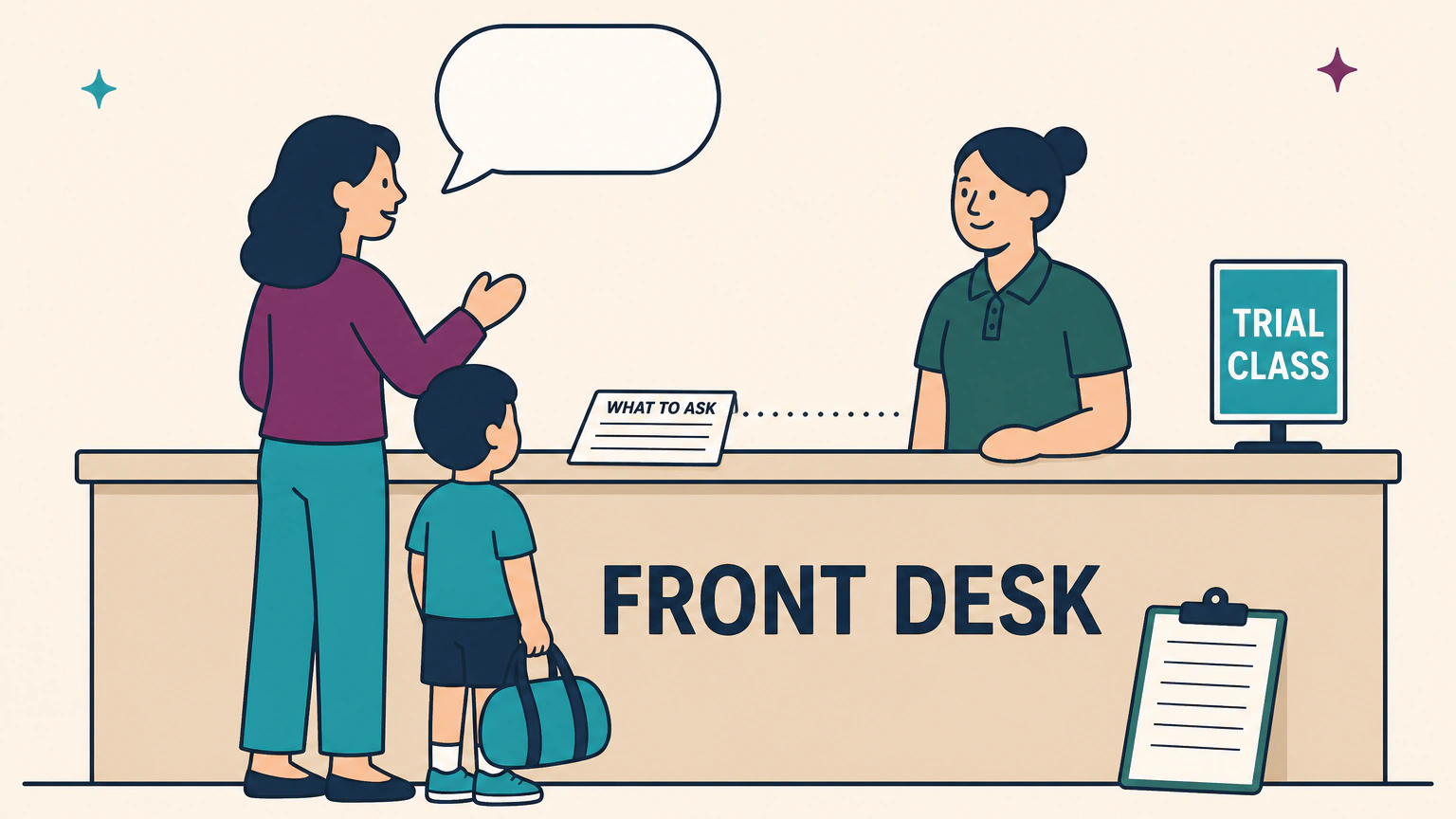
- What is the complete amount I must pay to enroll, including required fees and all class dates?
- How many swimmers are in this level, and can I change groups if the placement is wrong?
- What happens to my payment if I miss a lesson or the pool closes?
Ways to save
Compare the complete course bill before focusing on its per-class rate. For paired lessons, choose swimmers with compatible skills so both can use the coaching time.
Frequently asked questions
What should a first swim lesson cover?
Getting in and out safely, putting a face in the water, blowing bubbles, floating on the back and finding the wall. That is the whole opening stretch for a young child. Stroke shapes arrive once a child is comfortable and can take a breath without panicking. A school that spends those early weeks on arm technique is teaching the wrong thing first.
Should the teacher be in the water?
It depends who is being taught. With babies and nervous beginners, yes, because a teacher on the side cannot catch anybody. With older children working on stroke, a teacher on the deck sees more and can run a larger group. Either way the number of children per teacher is the figure that matters, so ask for it plainly and then watch a class to see whether it holds.
Does a level from another school count?
Rarely. Stage names look alike from school to school and mean different things, so almost every school assesses a new swimmer before placing them. Expect that rather than resent it. If your child is placed lower than you thought, ask what specifically is missing, because a straight answer shows the school knows what each of its stages contains.
Is the pool warm enough for a toddler?
Ask before you book. Pools built for lane swimming are cold for a small child, and a cold child shivers, cries and takes nothing in. Teaching pools are kept warmer and shallower for exactly that reason. Watch a class from the viewing area and count how many small children are still in the water and still listening by the end.
Who supervises the changing rooms and poolside?
Ask, because this is where swimming differs from a dry class. Children change, adults are around, and phones and cameras are a live issue. A school should have a photography rule, a policy on who may be in a changing room, and named adults on the deck who are not teaching. Background screening for people who teach children is a state matter, so ask what this school insists on.
Can an adult who is scared of water learn?
Yes, and many schools run adult beginner classes for exactly this. A good one starts in shallow water, sets no timetable for how fast anything happens, and does not make you put your face under on the first visit. Ask whether the class is adults only, because sharing a pool with a children's lesson puts a lot of people off before they start.