Overview: Guitar Lessons
Ask a guitar teacher whether a beginner should start on acoustic or electric. The answer tells you how they teach. A teacher who says acoustic first, because it builds discipline, is usually running a structured course. One who asks what music you listen to is going to start from songs you already know. Neither answer is wrong.
Electric strings sit closer to the fretboard and press down easier, which matters for a child or anyone with small hands. An acoustic needs no amp and goes anywhere. Either way the fingertips hurt for the first weeks until the skin hardens, and that is where a lot of beginners stop. The other wall is barre chords, where one finger has to flatten across the strings and nothing rings clean. That is a strength and placement problem, not a talent one.
Lessons come in two shapes. One-to-one in a back room at a music shop or in a teacher's house, and group classes where a handful of players work the same songs and end up playing together. Shops often run the group format, and that band feeling is why people keep turning up. Reading standard notation is optional here: most teaching uses tab and chord charts.
The lists below run from state down to city, so you can see which studios are listed where you live.
Cost of guitar lessons
Compare regular private tuition with a complete beginner group course. Include the right-size instrument and materials, and check whether the quoted lesson price requires a monthly or term commitment.
| Option | Estimated cost | What to compare |
|---|---|---|
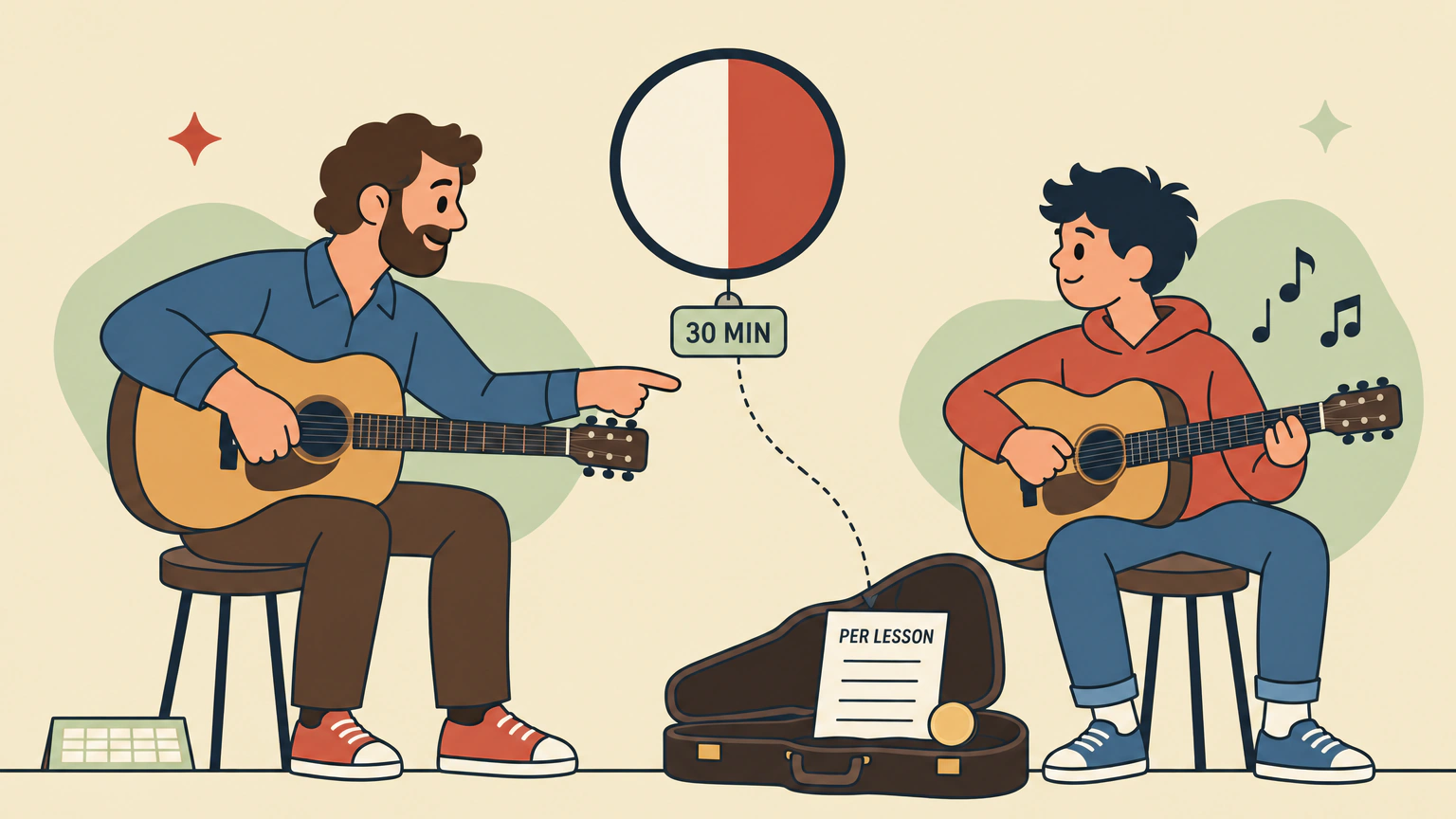
| 30-minute private tuition | $30–$60 per 30-minute lesson | One student with a teacher at the studio. Enrollment, instruments, materials and recitals may cost extra.Monthly or term enrollment may be required; confirm the full initial bill. |
| Weekly 30-minute lessons | $150–$240 per monthly payment | One private lesson each teaching week on the school calendar. Monthly payments may spread annual tuition over the year.Confirm teaching weeks, withdrawal notice and required enrollment or materials fees; four lessons are not guaranteed every calendar month. |
| 60-minute private tuition | $60–$115 per 60-minute lesson | One student with a teacher at the studio. Enrollment, instruments, materials and recitals may cost extra.Monthly or term enrollment may be required; confirm the full initial bill. |
| Eight-class beginner guitar course | $240–$360 per person per eight-class course | Eight taught group lessons of 60 minutes for adults or eligible teens starting guitar.Confirm instrument availability, required books and missed-class arrangements; the full course payment is shown. |
| Live online private tuition | $60–$115 per 60-minute lesson | One student with a live teacher. A suitable home setup and internet connection are needed.Recurring enrollment may be required; home instruments and materials are separate. |
Plan your total cost
Check what is included
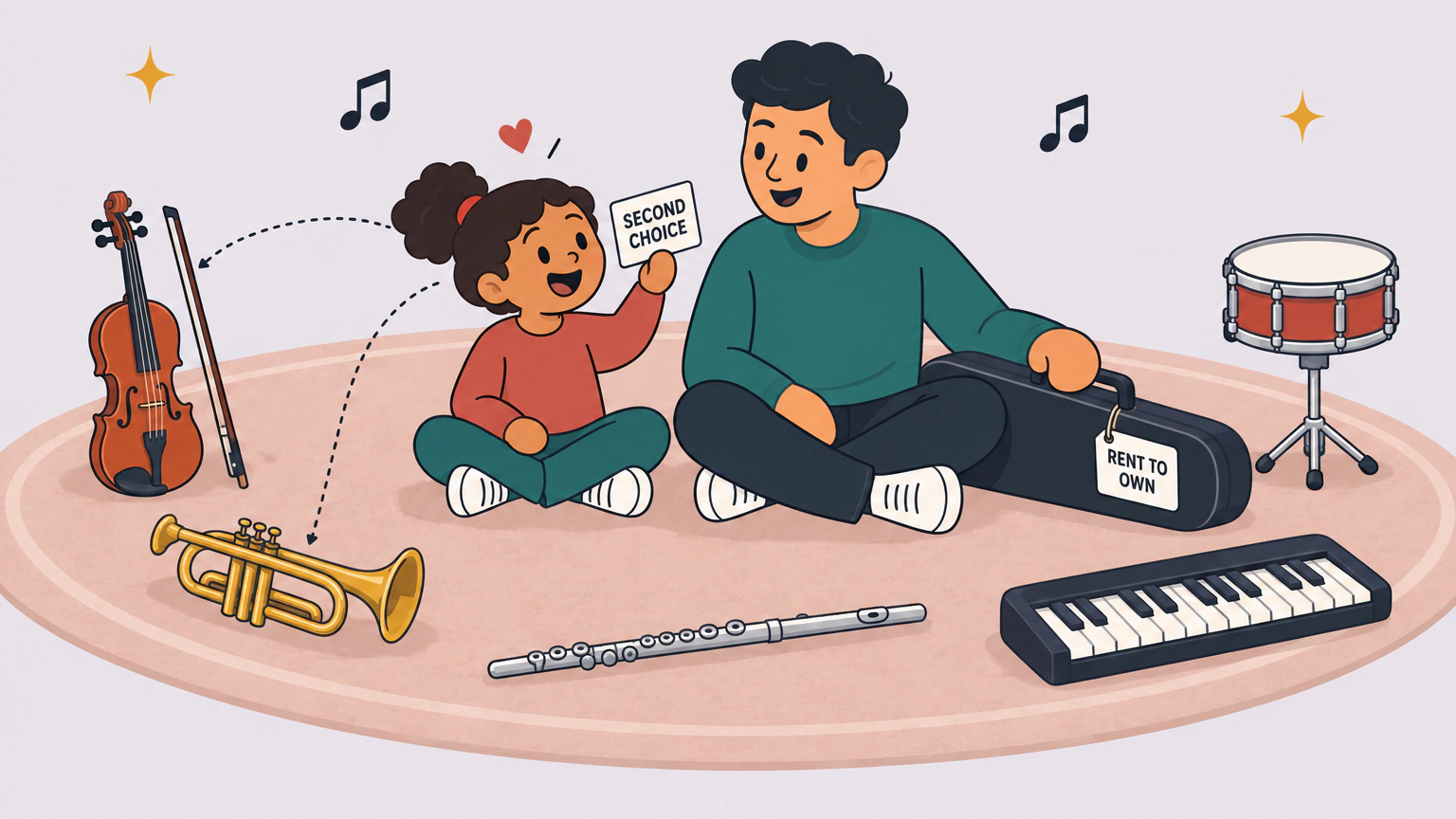
Instrument fit. Ask which guitar size and type suit the student, and whether a loan or rental is available.
Essential materials. Check books, picks, tuners and any required online learning subscription.
Teaching calendar. Confirm lesson count, holiday weeks, makeup availability and withdrawal notice.
What changes the price
Lesson focus. Beginner chords, classical technique, exams and advanced performance can involve different programs.
Private or group. Group tuition covers a course place; private lessons give individual teaching time.
Location. In-home instruction may add travel charges; live online still needs a suitable instrument and setup.
Ask before you book
- Can I borrow or rent an appropriate guitar before purchasing one?
- What is the complete enrollment payment, including books or required subscriptions?
- For the group course, how many students attend and what happens if I miss a session?
Ways to save
Compare a trial and a short beginner course before committing to a long term. If choosing private lessons, compare the same teacher’s payment options with their cancellation and makeup rules.
Frequently asked questions
Should a beginner start on acoustic or electric?
Start on whichever one plays the music the student actually wants to play. Electric is physically easier, because the strings are lighter and the action is lower, and it can be played through headphones. Acoustic is louder in a quiet house and needs nothing plugged in. The old rule that everyone must earn their way through an acoustic first is a preference, not a law of the instrument.
Is a full-size guitar too big for my child?
Often, yes. Smaller bodies and shorter necks are made for exactly this, in half and three-quarter sizes, and a child who can reach the low frets without hunching will stay with it longer. Take the child to a shop and let them hold a few. Renting is sensible, since a growing student outgrows the first instrument and the second one usually lasts.
My fingertips hurt. Am I doing it wrong?
Sore fingertips are normal and they settle once the skin toughens. Sharp pain in the wrist or the thumb is not, and it usually means the hand is gripping the neck like a hammer or the guitar is sitting too low on the strap. Mention it in the lesson. A teacher can also have the action lowered at a shop, which makes a cheap instrument far kinder to play.
Does a guitarist need to read music?
Not to play. Tab shows which fret to hold and gets a beginner into songs quickly, which is why nearly every teacher uses it. What tab hides is rhythm, so a student who only reads tab leans on hearing the recording first. Reading opens up written parts, ensemble work and classical repertoire. Ask the teacher which one they lead with and why.
What gear is actually needed to start?
An instrument, a clip-on tuner, a few picks and a strap. For electric, a small practice amp with a headphone socket and a short cable, and nothing more: pedals are for later and every teacher will say so. Spare strings and a string winder save one bad evening. Most studios provide the amp in the lesson room, so ask before you buy one.
Can a parent sit in on a child's lesson?
Ask that before you book, not after the first lesson has happened. Guitar teaching means putting a student's fingers onto the right frets, so hands get touched, and a room with a window in the door is a sign the shop has thought about it. Rules on screening adults who work with minors differ from state to state, so ask what this teacher or shop actually holds.